WhatsApp Automation for Small Business: Start with One AI Teammate

Small businesses do not need another dashboard full of disconnected automations. They need fewer repetitive replies, faster lead response, and a clear handoff when a customer needs a person.
That is a job for one focused AI teammate on WhatsApp—not an attempt to automate the entire business on day one.
See how Optimly automates WhatsApp conversations
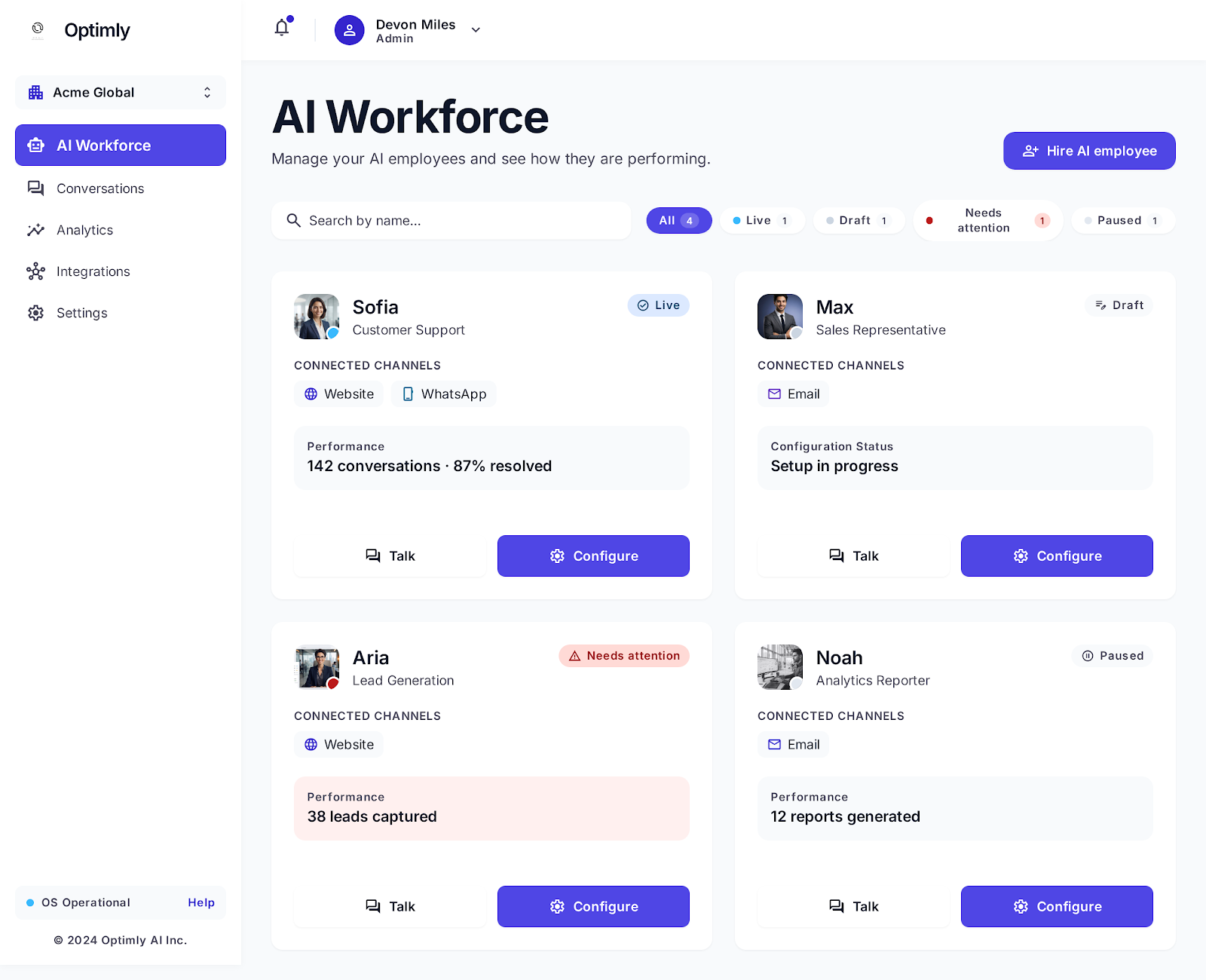
The best first tasks to automate
Choose work that is frequent, predictable, and easy to verify:
- Answer opening hours, service areas, pricing ranges, and availability questions.
- Collect the details a salesperson needs before calling back.
- Share a booking link or explain the next step.
- Provide order or appointment instructions from approved information.
- Recognize frustration and alert the right teammate.
Avoid starting with refunds, complex negotiations, or any process where an incorrect answer creates financial or safety risk.
Build the workflow around the customer
A useful WhatsApp automation has four stages:
- Welcome: explain that the customer is chatting with an AI assistant and ask how it can help.
- Understand: ask short, relevant questions rather than sending a form disguised as a paragraph.
- Act: answer, capture a lead, share the next step, or use an approved tool.
- Handoff: transfer context to a human when the request is outside scope.
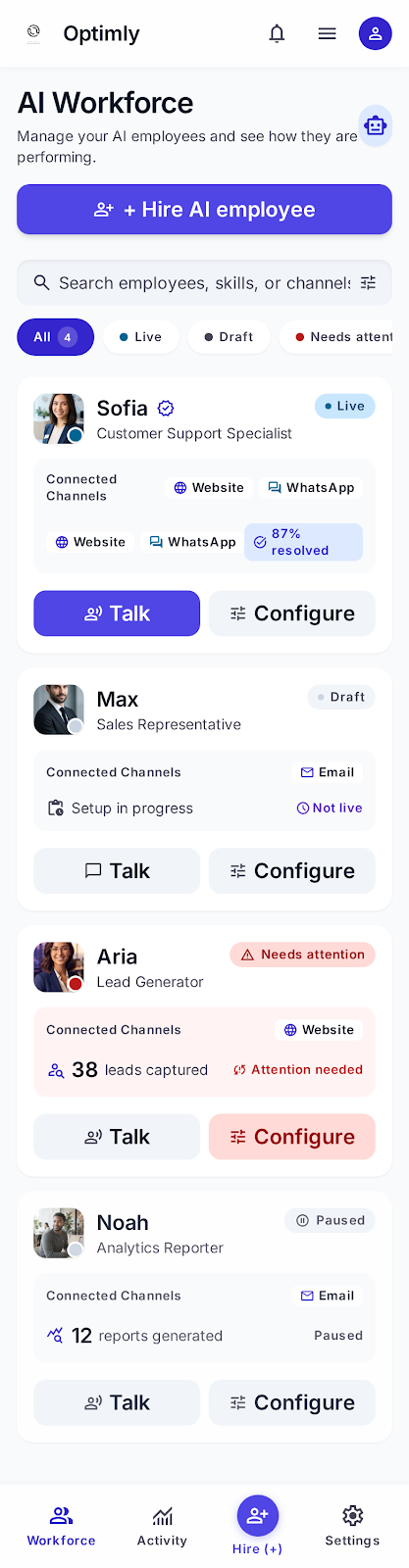
Connect without adding an integration project
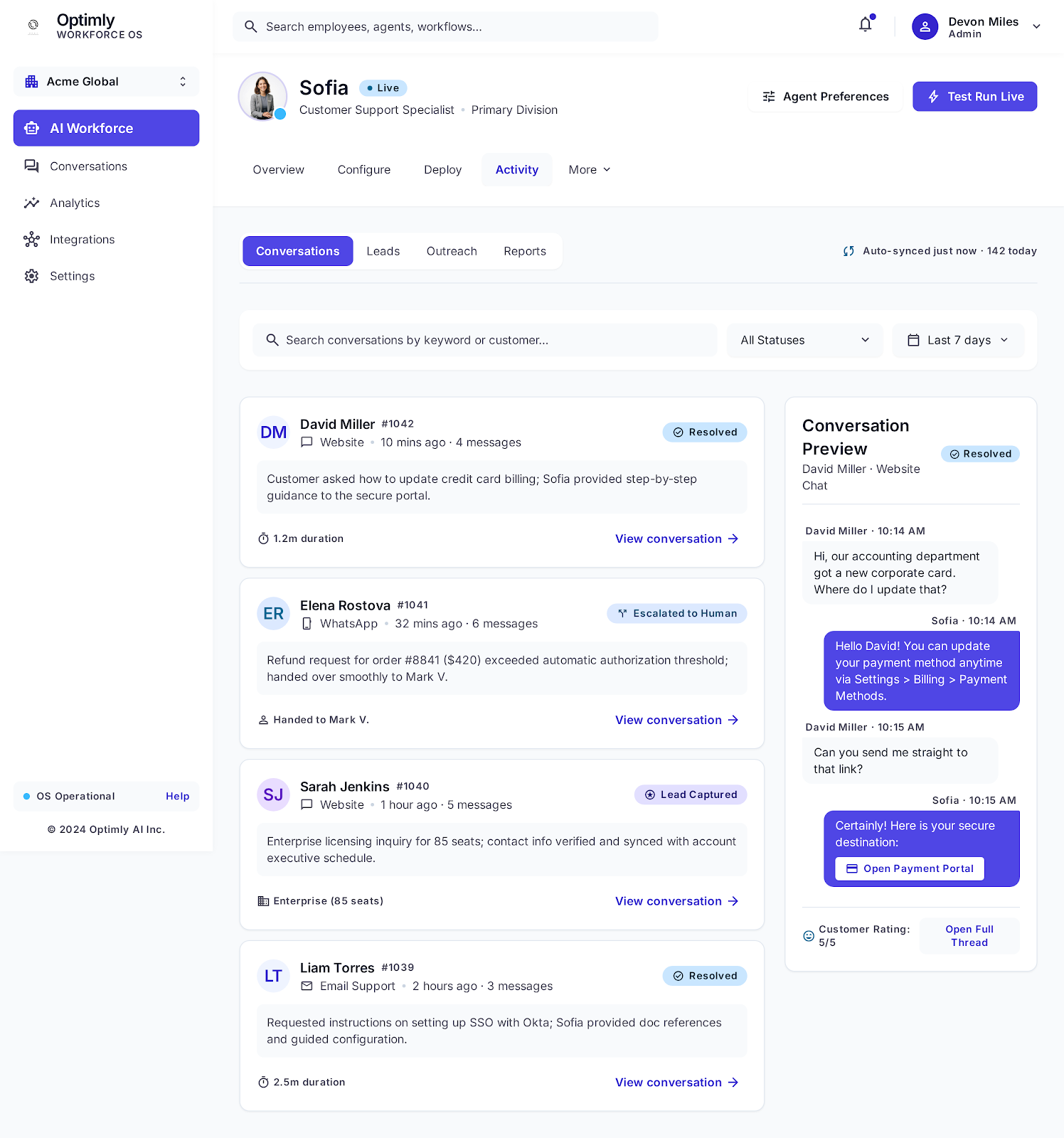
Optimly's OpenWA connection lets a team pair a dedicated WhatsApp number by QR. The same workspace holds the employee's instructions, knowledge, deployment status, and conversation history. That keeps the first experiment small and makes it possible to change the employee without rebuilding the channel.
Measure the business result
Track a handful of numbers weekly:
- Median first-response time.
- Conversations resolved without a handoff.
- Qualified leads captured.
- Handoffs accepted within your target time.
- Questions the employee could not answer.
- Customer complaints or opt-outs.
A high automation rate is not automatically good. If the employee closes conversations by frustrating customers, it is automating the wrong thing. Pair outcome metrics with a sample review of the actual messages.
A small-business safety checklist
- Use a dedicated number and keep the scope explicit.
- Tell customers when they are interacting with AI.
- Never invent prices, stock, appointments, or policy exceptions.
- Ask permission before collecting sensitive details.
- Make human takeover easy and preserve the conversation context.
- Start inbound-first; do not use automation for unsolicited blasts.
The smallest successful deployment is one employee that handles one queue reliably. Once the team sees which questions repeat, add knowledge or a second employee with a different job.